
Weber County Property Tax Records: What Each Record Answers
Two offices divide the work. In Weber County, the Assessor builds the assessment roll, placing a value and classification on each parcel. The Treasurer then bills and collects the property tax. Tax records therefore answer several distinct questions: what value went on the roll, what was billed, what was paid, and whether the account looks delinquent. A parcel card links to the tax tabs. The Treasurer lookup takes the parcel number without dashes. Neither record shows the full deed chain or fixes a sale price.
| Record | What it tells you | Office | Use it for |
|---|---|---|---|
| Assessment notice | Market value, classification, appeal route | Assessor / Clerk-Auditor notice | Reviewing the valuation for the tax year |
| Tax account | Charges, payment status, notice reprint | Treasurer | Checking the bill and account activity |
| Delinquent archive | Older delinquency entries | Treasurer | Researching unpaid-tax history |
| Parcel card | Parcel number, tax area, linked tax tabs | Assessor / parcel search | Matching the tax account to the land |
Keep the parcel number and tax year attached to every figure. Without them, a comparison between assessments means little.
Weber County Property Tax Records and the January 1 Date
January 1 matters more than people expect. Weber County's Assessor FAQ names it as the lien date and the date of value for the annual roll. Say a sale closes in August. The roll still reflects January 1. The tax value follows that stated valuation date, not a recent asking price or closing figure. Weber County's assessment notice is the right place to confirm the value and classification applied for a given year.
The Assessor, Treasurer, and Recorder each hold one piece. The Recorder keeps instruments and ownership references. The Assessor values property. The Treasurer bills and collects. That division explains why a deed price may not match the assessed value, and why payment status says nothing about who owns the parcel. Before comparing one department's data with another, pin down the year.
Weber County's Assessor FAQ explains the date-of-value rule and each office's responsibilities.
Weber County Property Tax Classifications
Classification drives the math. Weber County's notice shows that qualifying primary-residence property is assessed at 55 percent of market value. Non-primary and greenbelt categories sit apart from that level. Market value is not the taxable figure. Greenbelt is its own agricultural classification with separate qualification rules. Check the current Assessor instructions rather than assuming a parcel qualifies from its appearance.
Note both market value and classification on the notice before comparing taxes across years. Did the parcel's use or occupancy change? Then contact the Assessor about the current classification after checking the official notice. The county's application rules govern eligibility.
Weber County posts its valuation notice and appeal information with explanations of assessment levels.
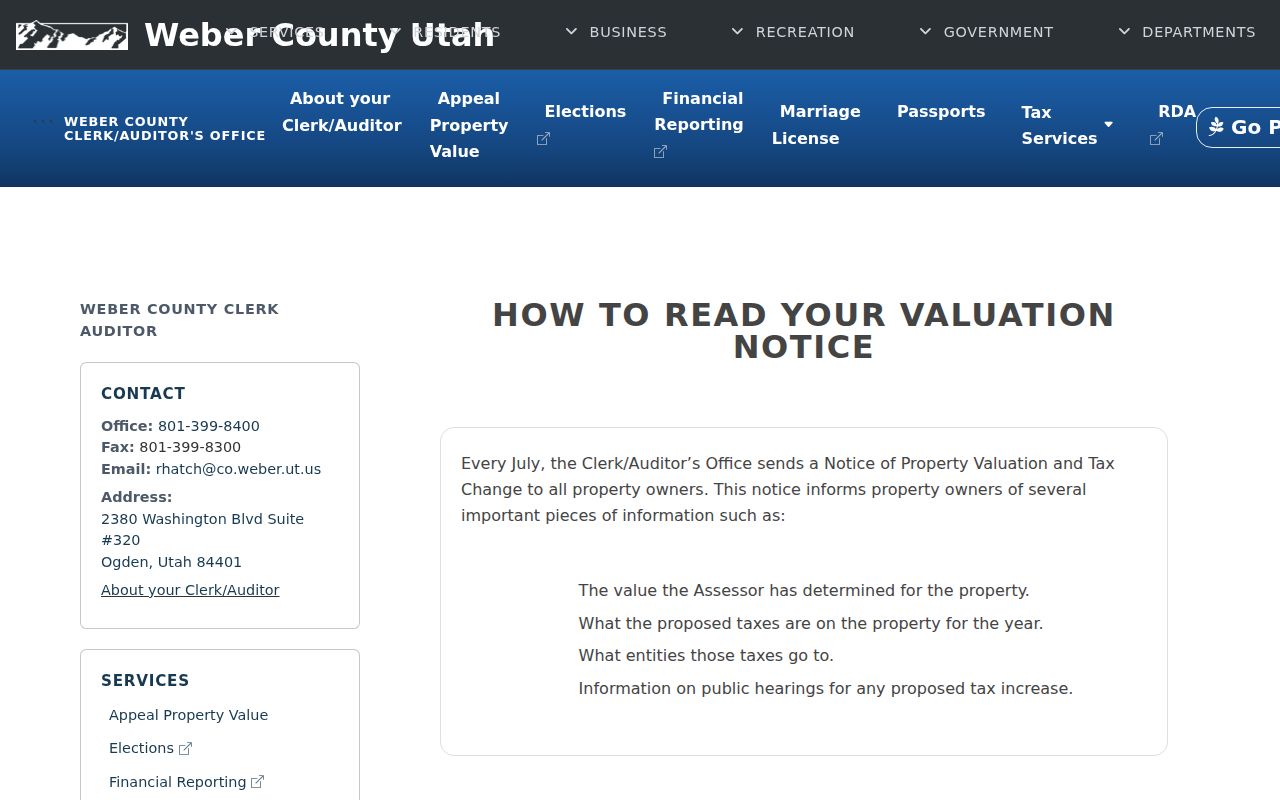
Use the current notice; older classifications may not match the roll.
Opening a Weber County Property Tax Account
The Treasurer portal handles parcel-based tax lookup and payment. Its entry form asks for the parcel without dashes. Start with the APN from the Assessor card. Strip the punctuation if prompted. Then confirm the returned address and parcel before reading any amount. Beyond the lookup, the portal links to notice reprints, relief information, payment, and delinquent archives.
Never identify a tax account by owner name alone. One name can carry several parcels. The payment account attaches to the parcel record itself. Keep the tax area and property address in view as a second check. The Treasurer custodians billing and payment status, while the Assessor remains the source for valuation and classification fields.
The Weber County Treasurer lookup describes the parcel-number entry route.
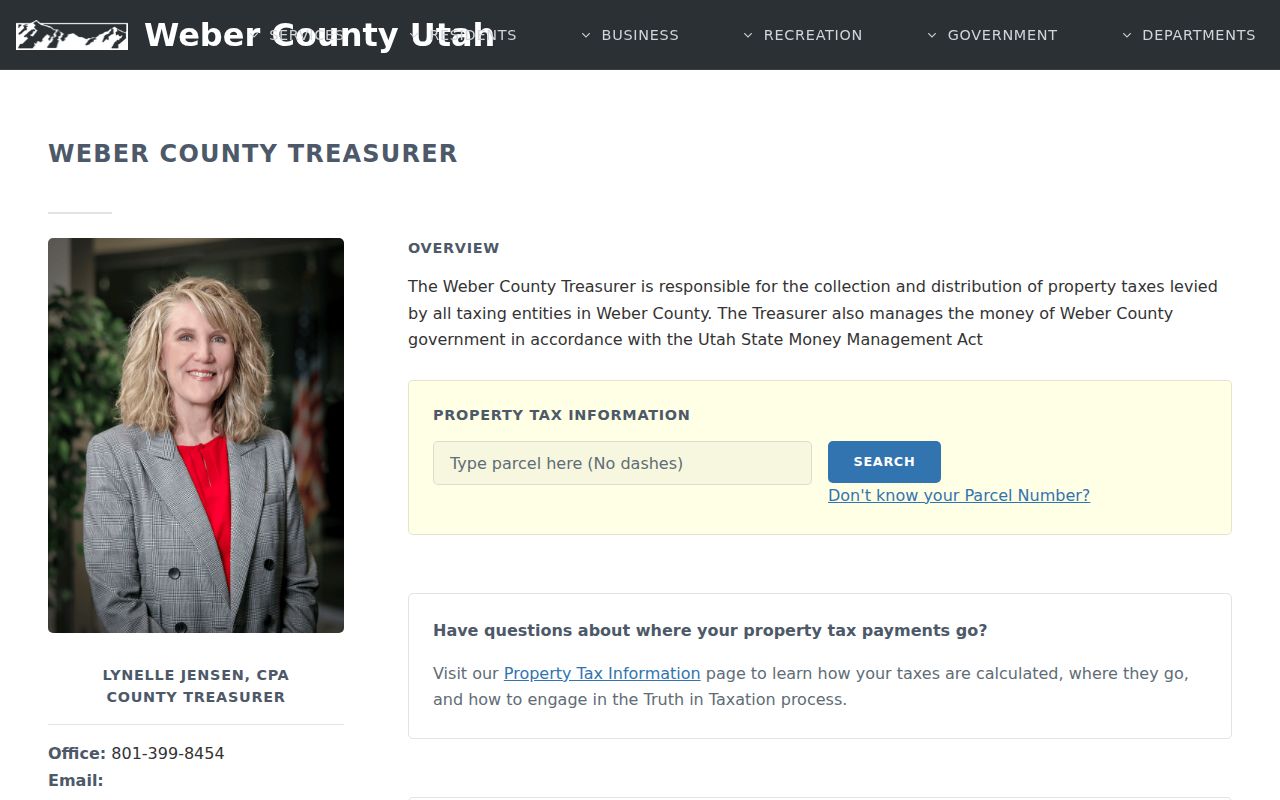
Save a dated copy of the result. Portal details change, and a current status may not preserve the full transaction history.
Weber County Property Tax History and Delinquency
A tax account shows current charges and payment status. For older unpaid entries, the Treasurer's delinquent archive is the separate route. Match the account to the parcel card first. A delinquent balance is a tax fact. It does not by itself disclose a title defect, property condition, or the value a buyer might pay. Use the Treasurer's current calculation and payment instructions for any payoff review.
Weber County tax-sale materials carry a warning worth heeding. A listed address may be the owner's mailing address, not the property location. Confirm the APN against the Assessor card, then compare its legal description and map position. A familiar street name is not enough to identify land in a tax-sale list. The same caution applies when the mailing city differs from the municipal boundary.
Keep the threads separate. The Treasurer answers the tax-account question. The Recorder answers which instruments were recorded.
Appealing a Weber County Property Tax Assessment
Start with the valuation notice. It identifies the parcel and the value. It also lists the classification and the appeal instructions for that tax year. Weber County posts a public appeal page with notice details and links to appeal materials. Deadlines shift from year to year, though, and the form fields are not fixed. Trust the notice issued for your parcel. Follow its deadline instead of a general calendar or an old copy.
- Match the notice to the parcel number and tax year.
- Check the market value and property classification shown.
- Collect relevant evidence tied to the valuation date, such as comparable property information or corrected property facts.
- Use the current appeal form and submit it through the official route by the stated deadline.
- Keep the filing confirmation and ask the Assessor or Clerk-Auditor about the next review step.
An appeal challenges the assessment decision only. It is not a deed correction or a tax payment. If the question is paying the bill, do not hold it while researching an appeal.
Weber County Property Tax Records and Truth in Taxation
Weber County's Assessor FAQ treats Truth in Taxation as part of the property-tax process. A bigger amount due does not always mean the market value moved. Tax rates and taxing-unit decisions shape the tax bill. The Assessor's market value and classification sit in separate fields on the notice.
Comparing bills takes care. Use the parcel number and tax area. Otherwise a nearby property in a different taxing unit will look like a fair match when it is not. The Treasurer's payment screen answers account status. The Assessor notice explains value and classification. For a parcel-specific calculation question, contact the office listed on the current notice.
Weber County Property Tax Records for Tax-Sale Research
Weber County's tax-sale page sends researchers straight to the tools that matter: parcel search, the GIS map, and Recorder services. Work from the parcel number first. Then locate the land itself, read the legal description, and pull the recorded references. The sale list alone proves little. A mailing address can point somewhere other than the property, and a tax-sale listing certifies neither title nor physical condition.
The county also publishes separate instructions and tax-account resources for Weber County property tax records, so confirm current terms and any sale-specific requirements on the official page. When a recorded deed or lien touches a parcel, the instrument record holds the answer, and a qualified title professional can weigh what it means for a purchase.
Weber County's tax-sale information carries the county's own research cautions along with those links.
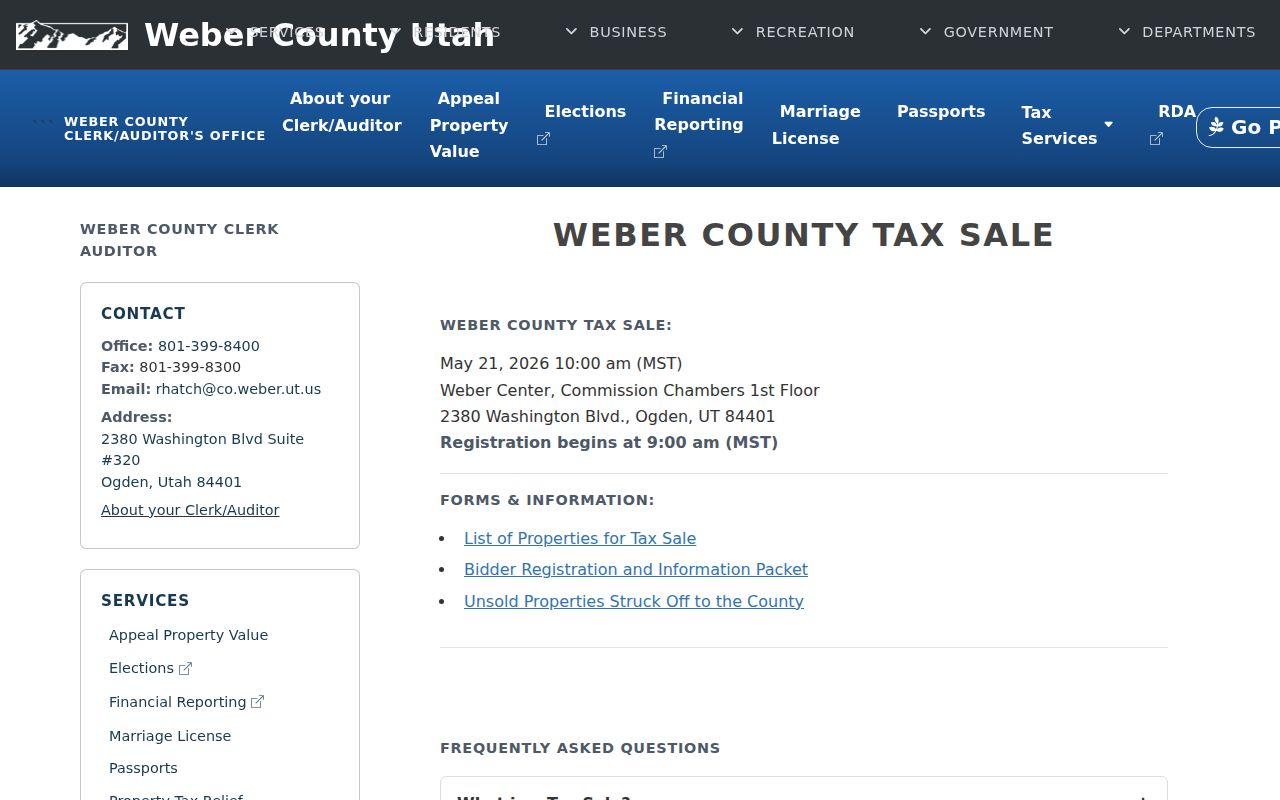
Check any sale-related address against the parcel's situs address and legal description first.
Weber County Property Tax Records and Value Are Different Questions
Property tax records show the assessment and account activity used for taxation. They do not price a sale. The tax bill is not the assessed value either. For what the market, assessed, and last-sale numbers mean, see the Home Value. For the tax question, keep the assessment notice and Treasurer account together. Confirm both cover the same parcel and year.
Start with the APN and notice year. Then check the tax area and classification before comparing amounts due. If the market value looks wrong, follow the appeal directions on the current valuation notice. If the concern is payment status or a delinquency entry, use the Treasurer account. Ask that office how it calculates the current balance. The tax-sale page is a separate route. Read it beside the parcel card, legal description, and recorded references. Keeping these tasks distinct directs each question to the right Weber County custodian.
Check the source and year. A parcel search, annual valuation notice, and tax payment account are separate Weber County records. Verify each with its custodian before relying on a figure.